CN
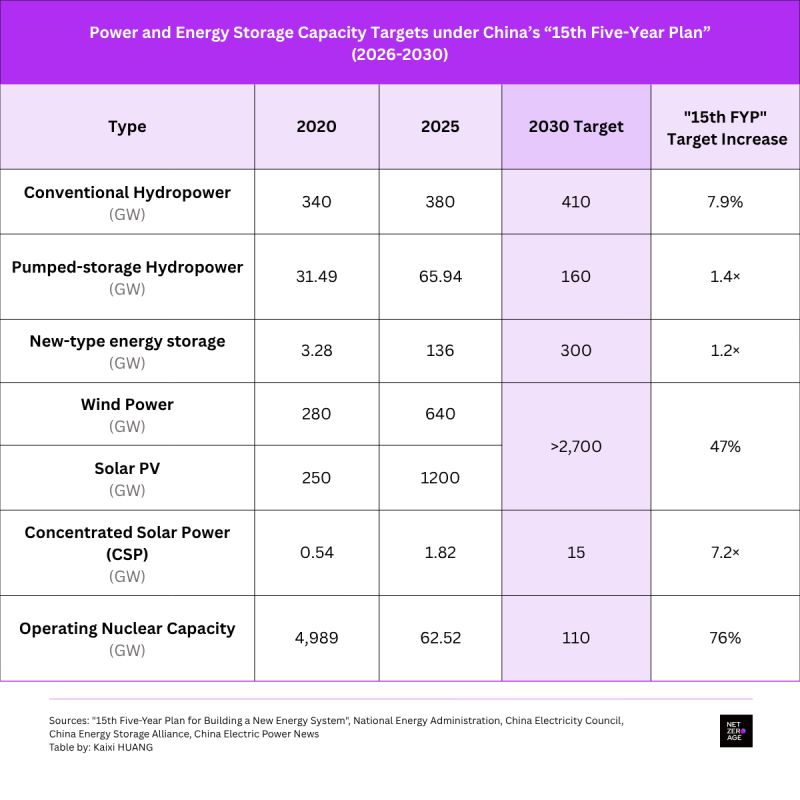

On June 25th, the “15th Five-Year Plan” for a new energy system was released by the NDRC and the NEA in China.
The plan proposes that a clean, low-carbon, safe, and efficient new energy system will be initially established by 2030.
Equivalent 5.8 billion tonnes of standard coal will be the total integrated energy production capacity in 2030, a notable increase from 5.13 billion tonnes in 2025. The share of electricity in the nation’s total final energy consumption is expected to rise from around 30% in 2025 to roughly 35 percent by 2030.The complementarity, mutual support and safety resilience of the power grid will be comprehensively enhanced. Energy import sources will be made diversified and controllable.
By 2030, total installed power capacity is expected to rise from 3890 GW in 2025 to 5400 GW, while the share of non-fossil energy in total consumption will increase from 21.7% in 2025 to 25% in 2030.
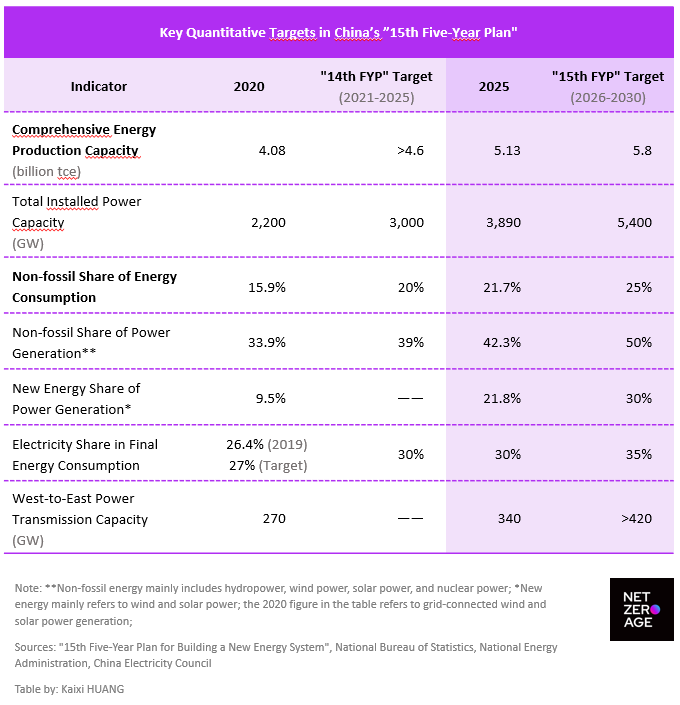
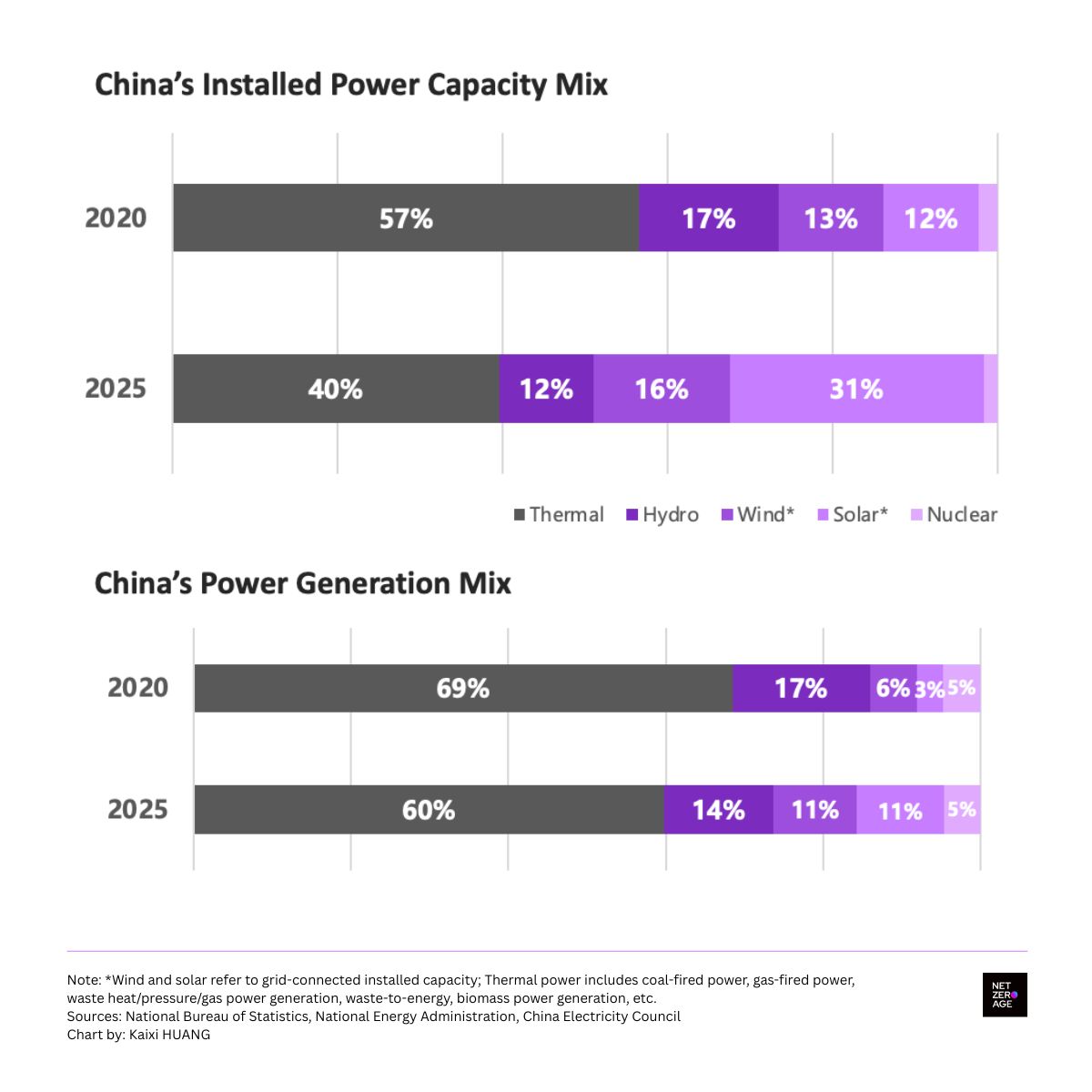
By 2030, the new grid system is aimed to accommodate 900 GW of distributed new energy integration. The build-out of smart grids will be expedited, with pumped storage capacity reaching about 160 GW and new-type energy storage capacity reaching 300 GW by 2030. Non-fossil energy will become the dominant source of power generation, accounting for 25% of total energy consumption and 50% of total electricity generation. Coal and oil consumption will peak, while the combined installed capacity of wind and solar power will exceed 50% of total power capacity, making them the mainstay of power installation.
The new power system will be initially completed. Construction of a resilient, green, low‑carbon, integrated and intelligent new energy infrastructure system will be accelerated. The strategic energy security baseline in extreme scenarios will be consolidated, with the security basis for the energy transition, including key minerals for new energy and coal reserves reinforced. In terms of spatial layout, the plan emphasizes adhering to a "coordinated national planning",balancing energy and economic development, aggregate supply and structural composition, national and regional considerations, and domestic and international dimensions. The five growth pillars for non‑fossil energy will be pursued through a parallel development of wind, solar, hydro, nuclear power and more, putting the decade‑long action plan to double non‑fossil energy capacity into effect. In energy resource rich areas, energy exploitation and industrial chain extension will be strengthened. A coordinated approach will balance local power use in the west with west-to-east power transmission, while fostering the integrated growth of the power with advanced manufacturing, computing power, hydrogen, and other industries. Written by: Limin Li

Contact Us:zerocarbon2060@outlook.com




copyright@2025 零碳时代,All Rights Reserved 备案号:闽ICP备14008486号-14
Fill out the form to receive a free electronic version of the magazine