
CN


Behind the controversy over hourly matching lies a deeper dispute over power system decarbonisation pathways.
By Ying Zheng | Edited by Shulin Han
An intense debate sweeping the global carbon-accounting field is dividing people who are otherwise united in their support of power system decarbonisation.
On 10 June 2026, 25 environmental organisations, climate think tanks, and specialist organisations from around the world - including Greenpeace USA, the Natural Resources Defense Council (NRDC), EnergyTag , the Environmental Coalition on Standards (ECOS), and the NewClimate Institute - sent an open joint letter to David Kennedy, CEO of the Science Based Targets initiative (SBTi), and to its Technical Council.
The letter expressed concern about the then-ongoing revision of SBTi’s Corporate Net-Zero Standard and the Scope 2 technical requirements.
According to the joint letter, SBTi had come under pressure from some companies and industry groups to relax the Scope 2 requirements in the Corporate Net-Zero Standard V2.0 draft, allowing companies to use annual electricity matching to set and implement their Scope 2 targets. The signatories urged SBTi to ensure that the relevant revisions continued to be in alignment with the direction being taken by the Greenhouse Gas Protocol (GHG Protocol)’s own revision process. They warned that if looser provisions were adopted, these would weaken the connection between corporate electricity procurement and actual emissions-reduction outcomes, undermine the scientific basis of SBTi’s standards, and affect its credibility.
SBTi is an international body jointly launched in 2015 by CDP (a global environmental-disclosure nonprofit, formerly the Carbon Disclosure Project), UNGC (the United Nations Global Compact), WRI (the World Resources Institute), and WWF (the World Wide Fund for Nature). Through standards, tools, and guidance, it aims to help companies and financial institutions advance credible, science-based climate action.
SBTi’s Corporate Net-Zero Standard is an important framework used by companies worldwide to set climate targets.
In its V2.0 consultation draft released in November 2025, SBTi proposed phasing in hourly electricity matching from 2030 and requiring companies with relatively high electricity consumption to meet minimum matching ratios as one condition for meeting their science-based targets.
However, under pressure from interested parties, SBTi ultimately relaxed its requirements for hourly matching.
On 11 June 2026, SBTi published the final version of the Corporate Net-Zero Standard V2.0 on its website.
With regard to Scope 2 accounting, the final standard acknowledges the theoretical advantages of hourly matching and continued to emphasise the importance of closer temporal alignment. However, it does not make hourly matching one of the conditions for companies to meet their science-based targets.
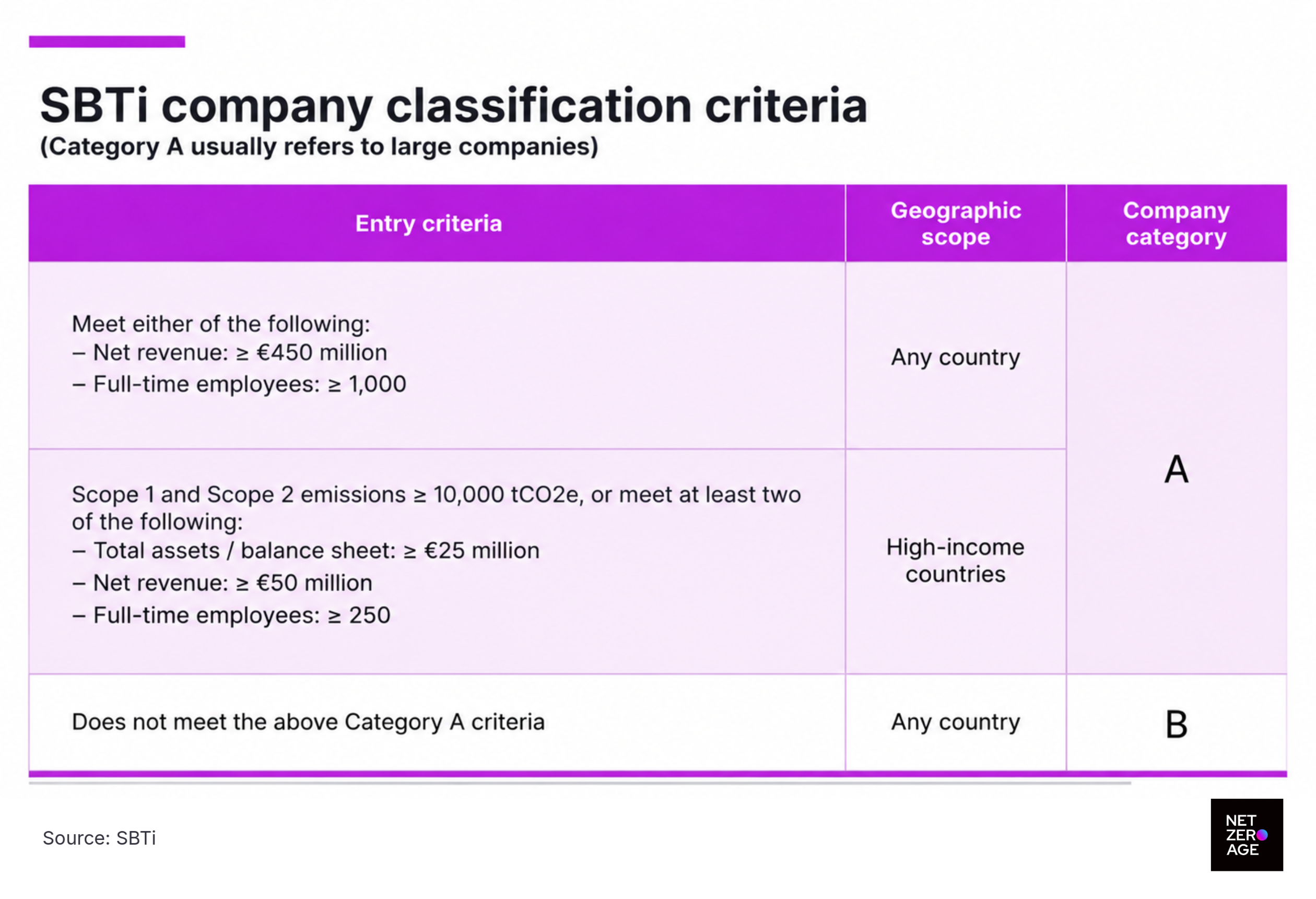
It only requires Category A companies with annual electricity consumption of at least 10 GWh to disclose the share of their electricity matched with low-carbon electricity attributes on an hourly basis. Companies below the 10 GWh threshold are not subject to mandatory disclosure requirements and may choose for themselves whether to disclose this information.
On 11 June 2026, The Wall Street Journal published an article on SBTi’s updated rules, in which SBTi CEO David Kennedy explained SBTi’s approach to hourly matching. SBTi acknowledged the advantages of hourly matching, stating that it “is generally preferable to annual matching, as it can support more effective price signals for load shifting and investment in low-carbon generation and storage, and better align electricity demand with low-carbon supply.”
However, Kennedy said the academic literature on hourly matching remains at an early stage and isn’t definitive enough to show the model’s impact. He mentioned “For hourly matching, the infrastructure doesn’t exist and the markets don’t exist either. Mandating something in that situation is just a leap into the abyss, which is why we have a progressive approach”.
SBTi therefore ultimately favoured a gradual, differentiated approach to implementation.
Companies will be allowed to continue setting and implementing their Scope 2 emissions targets on an annual basis.
Large companies with high electricity consumption, such as technology companies, will face additional disclosure requirements on their hourly electricity use and the proportion matched with low-carbon electricity, in order to increase data transparency.
They will not, however, be required to set hourly-matching targets.
Why did SBTi make this decision?
Its public consultation feedback report, released at the same time, may offer some clues.
Alongside the release of the final V2.0 standard and associated media interviews, SBTi updated its website with a statistical report summarising responses to the final round of public consultation held in November 2025.
Only about 37% of respondents supported the hourly electricity-matching proposal in the draft. Opponents accounted for 51%, while another 12% were neutral on the issue or considered it of limited relevance to them.
More than half of the respondents from civil society organisations, academia, and similar groups supported hourly matching. By contrast, companies and industry associations - which together accounted for about 88% of all consultation responses - were mostly opposed to hourly electricity matching, with opposition rates of 54% and 61%, respectively.
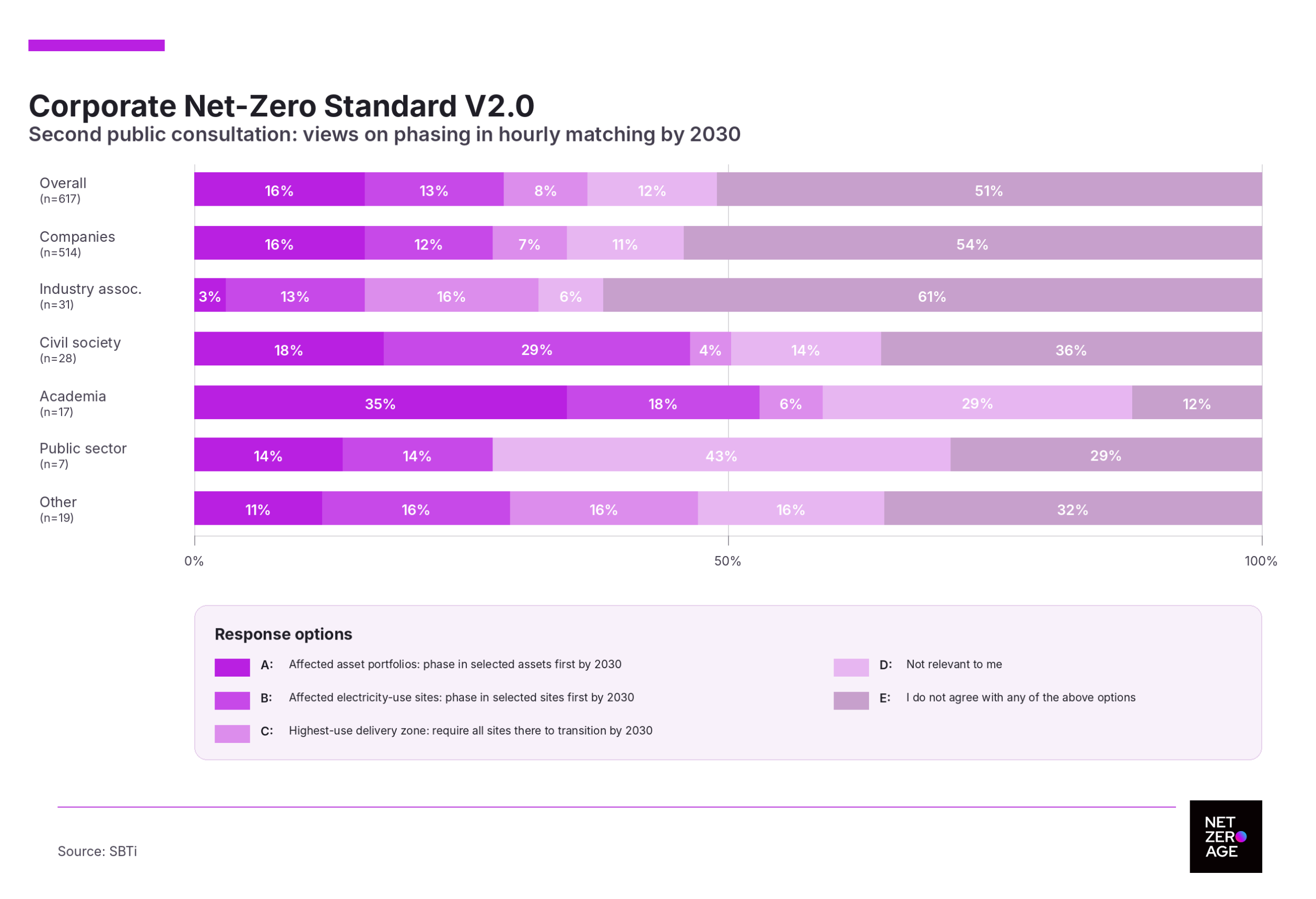
This result explains, to some extent, why SBTi ultimately chose a more moderate and gradual route. The approach adopted in the final standard clearly leaned towards the demands of some companies and industry groups. The adjustment quickly drew criticism from environmental organisations and academia, which argued that SBTi was losing the very foundation of its identity as a “science-based” initiative.
The SBTi standard update has once again put the question of whether hourly electricity matching should be made mandatory in global carbon-emissions accounting rules at the centre of public debate over global climate governance.
On the surface, this appears to be a dispute over the methodological approach for Scope 2 accounting. Yet once the outer technical layer is peeled away, the dispute comes down to a fundamental question:
which path should be chosen next to advance power system decarbonisation?
Where did the dispute over hourly matching come from?
At the heart of the global response to climate change is the energy transition. In practical terms, the obvious path forward is electrification and decarbonisation, with electrification powered by non-fossil energy - especially renewable energy - playing a central role.
Yet renewable generation technologies such as wind and solar, which depend heavily on fluctuating weather conditions, are highly variable. Electricity itself is produced and consumed in real time.
This means that an important aspect of current power system design is the encouragement of demand-side users to adjust the timing of electricity use dynamically in production and daily life in accordance with generation conditions, so as to adapt to the characteristics of the new generation mix.
In theory, when guiding changes in user behaviour, price instruments should be the first mechanism considered. If electricity-price signals that reflect real-time changes in market supply and demand can be transmitted to users promptly and fully, users can adjust their electricity consumption in response to those signals.
The reality, however, is highly complex.
On the one hand, not every country has a fully market-based electricity-pricing system. In many countries, electricity prices remain regulated or semi-regulated, making it difficult to form real-time prices capable of achieving the intended effect of shaping user behaviour.
On the other hand, even in markets with well-developed price formation, there are clear limits to the effect of electricity-price signals on user behaviour. When companies make decisions, they consider not only the electricity price but also the additional costs created by adjusting production plans and other arrangements. If the benefits arising from electricity-price fluctuations are not enough to cover those costs, the companies’ willingness to participate in demand response by adjusting production or installing energy storage will be greatly reduced.
To make up for the limitations of price instruments in promoting the consumption of renewable energy, market participants have gradually developed a series of non-price mechanisms to supplement them. These include
renewable-energy consumption commitments
voluntary emissions-reduction mechanisms
the design of carbon-emissions accounting methods
all of which are intended to encourage the power system to prioritize renewable electricity integration and users to increase their consumption of renewable electricity.
Over the past several decades, price instruments and non-price mechanisms have together played an important role in promoting the development of renewable energy.
As these approaches have become more embedded, a new question has emerged. Most existing approaches to renewable-energy consumption claims or accounting employ energy attribute certificates and conduct matching or statistical accounting on an annual basis. This does not seem to correspond to the real-time production and consumption characteristics of electricity.
Does matching at such a coarse time scale genuinely promote renewable-energy consumption? Or, to put it another way, to what extent does annual matching help reduce emissions in the power system?
A number of institutions subsequently researched the issue and published their findings. One of the best-known studies came from Princeton University.
Researchers examined voluntary clean-electricity procurement scenarios in the power system of the western United States and found that clean-energy procurement based on annual matching had a very weak effect on emissions reductions. They determined that hourly matching could reduce system-level emissions and help increase the early adoption of some advanced clean-energy technologies, but it would bring with it higher system costs.
While academic research provided the theoretical basis, industry practice helped put theory into action.
In 2018, technology company Google published the well-known article “Moving toward 24x7 Carbon-Free Energy at Google Data Centers: Progress and Insights,” in which it systematically set out, for the first time, its goal of achieving 24/7 carbon-free electricity supply for its data centers. This helped move hourly matching from academic discussion into global industrial practice.
Hourly electricity matching then began appearing frequently in various policies and documents. In March 2025, SBTi’s first draft of the Corporate Net-Zero Standard V2.0 proposed matching electricity consumption with electricity supply in both time and location under the market-based method, presenting temporal and geographic matching as important requirements for corporate Scope 2 target-setting and assessment.
In the second consultation draft in November 2025, temporal matching was further refined into hourly matching. The draft proposed introducing an hourly-matching mechanism for some companies with relatively high electricity consumption and requiring them to set minimum matching-ratio targets in phases.
However, as noted above, SBTi has since relaxed this requirement, changing it from a target-setting requirement into a requirement to disclose the proportion matched.
In October 2025, the GHG Protocol opened its draft Scope 2 accounting guidance for public consultation. The draft likewise proposed requirements for hourly and geographic matching in Scope 2 accounting, though that revision is still under way.
Firmer support has come from policies issued by some regions and countries.
First, the European Union incorporated provisions related to hourly electricity matching into the Renewable Energy Directive III (RED III) and the detailed rules for the production of renewable fuels of non-biological origin (RFNBOs).
Second, the US federal government introduced the same requirement in the final rules for the Section 45V clean hydrogen tax credit under the Inflation Reduction Act (IRA).
Third, in the rules for calculating embedded emissions of goods under the Carbon Border Adjustment Mechanism (CBAM), released by the European Union in December 2025, it was made clear that where actual emission factors are used to determine indirect emissions on the basis of a direct technical connection or a power purchase agreement (PPA), electricity metering data at intervals of no more than one hour must be provided.
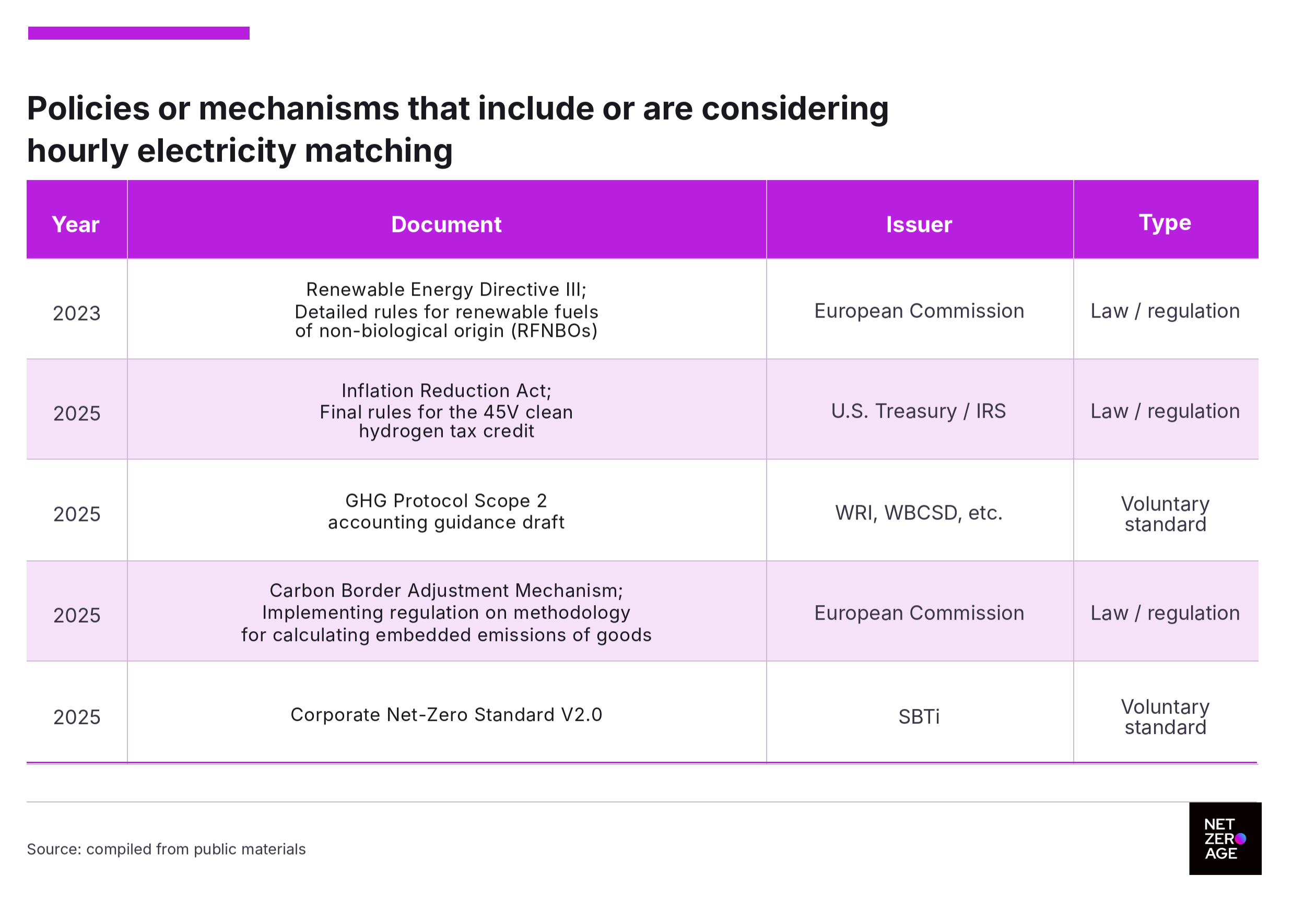
Laws, initiatives, and technical documents have adopted hourly electricity matching for different reasons. Some are intended to facilitate an accurate calculation of subsidy amounts or carbon-emissions costs; some aim to promote the development of renewable energy and energy storage; others aim to accelerate the phase-out of fossil-fuel generating units.
Despite their different motivations, they have converged on the same approach and ultimately share a common goal:
addressing climate change and advancing the energy transition through the broader application of hourly electricity matching.
What is actually being contested in the hourly-matching debate?
The existence of academic research and support from policies and standards does not mean that everyone accepts the efficacy of hourly matching.
On the contrary, different stakeholders with different interests and priorities have engaged in an exceptionally intense debate over whether hourly matching should be promoted through more broadly applicable standards.
Amid the wave of artificial-intelligence development, technology companies are a typical example of electricity demand growing rapidly from a relatively small base. They have also been at the forefront of the public debate, both in support of and opposition to hourly electricity matching.
Some technology companies, with Google as a prominent example, believe that hourly matching of electricity consumption is more conducive to promoting the decarbonisation and transformation of the power system. They have been among the strongest advocates for incorporating hourly matching into international standards and accounting frameworks.
They have not only imposed requirements on themselves for the proportion of electricity matched hourly, but have also actively taken part in related activities, helping promote the adoption and application of hourly matching worldwide.
On the other side, another group of technology companies - notably Amazon and Meta - have questioned whether hourly matching is the most appropriate approach.
The Emissions First Partnership, in the establishment of which these companies played a leading role, sent an open letter to the GHG Protocol, arguing that from the perspective of promoting system-level emissions reductions, hourly matching still involves potential risks and uncertainties. It argued that a marginal-impact accounting method centred on measuring marginal emissions-reduction impact would be more reasonable than hourly matching.
Industrial companies - which account for the bulk of global electricity consumption and carbon emissions - take a more complex approach. They rarely speak publicly like technology companies, and have therefore become the silent majority in the public debate.
On the one hand, more and more large multinational industrial companies have set their own emissions-reduction or renewable-energy consumption targets in order to support the response to climate change and promote power-grid decarbonisation.
According to data published on SBTi’s website, as of 26 June, 13 762 companies had either set targets or made commitments, of which SBTi had validated the targets of 11 389. Among the 2 655 companies that had set net-zero emissions targets, many were industrial companies. Of the 441 companies that have joined the global RE100 initiative (launched in 2014), nearly half are industrial companies.
On the other hand, the global economy is currently in a period of turbulence. Most companies are seeking to meet their emissions-reduction targets in a way that is more economical, more stable, and more realistic.
If the rules change substantially, will this be an opportunity or an additional burden? For companies in different markets, it is difficult to give a definitive answer.
In discussions with many industrial companies about approaches to reducing Scope 2 emissions, I found that every one of them was working to meet emissions-reduction targets and support power system decarbonisation through investment, electricity trading, and other means.
However, when it comes to incorporating hourly electricity matching into mainstream rules, their attitudes vary. Some companies support it, seeing it as an opportunity for innovation that can help advance grid decarbonisation and support business operations.
For large electricity users whose operations must run continuously and steadily around the clock, however, concern often outweighs support:
“We all firmly support the objective of accelerating power-grid decarbonisation, and we have invested a great deal in it. But our support is not entirely without regard to cost.”
“Market mechanisms and infrastructure differ between regions and countries. Many of these challenges are objective realities. It is not simply a matter of being able to do something just because we want to.”
“The starting point of most current rule design is to accelerate the transformation of electricity generation and power grids. But has anyone assessed the high risks and high levels of investment that electricity users face in this process?”
Even greater disagreement has emerged among non-governmental organisations (NGOs). Following publication of the joint letter on the professional networking platform LinkedIn, the various sides once again launched into a fierce debate in the comments section.
Supporters cited research findings from Princeton University, the Technical University of Berlin, and other institutions, arguing that previous annual matching could neither reflect actual consumption patterns nor deliver genuine emissions reductions, while hourly electricity matching can promote system-level emissions reductions.
They also pointed to the practice of some utilities as evidence that implementing hourly matching could actually reduce costs.
Opponents of hourly matching argued that existing annual matching still faces unresolved problems such as poor data quality and an oversupply of certificates, and that many regions around the world have not even managed to implement annual matching properly.
Why not solve the immediate problems first? If companies facing strict energy-related standards chose to weaken their targets or simply abandon their emissions-reduction commitments, that would be an even more serious setback for the transition toward decarbonisation.
Stakeholders around the world have argued in this way, round after round. The positions of those supporting annual renewable-electricity matching, those supporting hourly matching, and those supporting marginal-impact accounting have become increasingly entrenched.
Each side believes that the approaches advocated by the others lack sufficient practical experience, market foundations, and scientific evidence, and accuses the others of enabling greenwashing or producing misleading carbon-accounting outcomes.
Yet what they are actually arguing over is the same question:
What, ultimately, is corporate consumption of renewable electricity meant to achieve?
Which approach is the best path towards that goal?
To this day, the discussion continues, with no sign, as yet, of a clear answer.
Division or compromise?
Is there really no middle ground?
The Center for Resource Solutions (CRS), addressed the debate in a May 2026 article, Why Are We Fighting About GHG Accounting?, written by Todd Jones, CRS Head of Policy.
The article discussed three approaches:
Annual market-based accounting
Hourly and locational matching
Consequential accounting.
It argued that these approaches answer different questions and serve different purposes, and that “these approaches can coexist.” The article further stated: “Annual matching remains credible and effective. Hourly and locational matching can provide additional precision and sharper market signals. Consequential accounting can offer complementary insights into broader system impacts.”
CRS calls for all parties to stay united and avoid division. By expanding participation, continuously improving data and transparency, and sustaining innovation, they should jointly safeguard the continued development of renewable-energy markets without damaging the existing market structures that have promoted clean-energy growth.
Yet the debate has not only continued but intensified following the release of the SBTi document.
It is clear from the my long-term tracking of these developments that almost no one disputes the long-term value of hourly matching in helping power systems accommodate more renewable generation and advancing the deep decarbonisation of grids.
However, there are significant disagreements over whether it should be incorporated into mainstream rule systems and implemented comprehensively across the board.
The fundamental reason is that different actors have different priorities.
Government departments, as policymakers, are concerned with the overall effects of climate and energy policy on economic activity, industrial development, and social costs. Research institutions explore pathways for system-level optimisation - that is, what kind of emissions-reduction mechanism better reflects how the power system actually operates.
NGOs generally work in pursuit of their stated advocacy goals, and are more concerned with whether rules can put the decarbonisation pathways they advocate into practice and achieve the associated objectives. Companies face more complex considerations: they must respond to emissions-reduction requirements while also taking into account investment in innovation, operating costs, and industry competitiveness.
As the global energy transition enters deeper waters, every future step in the transition will mean more complex technical requirements, more refined market design, and more concrete cost implications.
Once the discussion reaches this level, what people are arguing about is no longer whether the goal of decarbonisation should continue to be upheld. The real questions are
who should bear the costs of system-level emissions reductions
who stands to benefit from changes in the rules
how quickly stricter accounting requirements should be introduced
how far those requirements can reasonably go
From this perspective, the current discussion around hourly matching is not simply a dispute over technical pathways. On the surface, the topic is mostly about which accounting and matching methods should be used.
But at a deeper level, because they are in different industries and focus on different concerns, the various stakeholders are reaching entirely different conclusions about which approach can advance power system decarbonisation both rapidly and effectively.
If this continues, standards and methods for electricity consumption and emissions accounting will become increasingly fragmented and irreconcilable. This is why CRS has called on stakeholders to move beyond division and refocus on their shared objective.
Yet it is worth remembering that global progress has been sustained precisely through a continuing process of debate, correction, and compromise.
English translation by Marco Lin | English edited by Helen Farrell

Contact Us:zerocarbon2060@outlook.com




copyright@2025 零碳时代,All Rights Reserved 备案号:闽ICP备14008486号-14
Fill out the form to receive a free electronic version of the magazine